

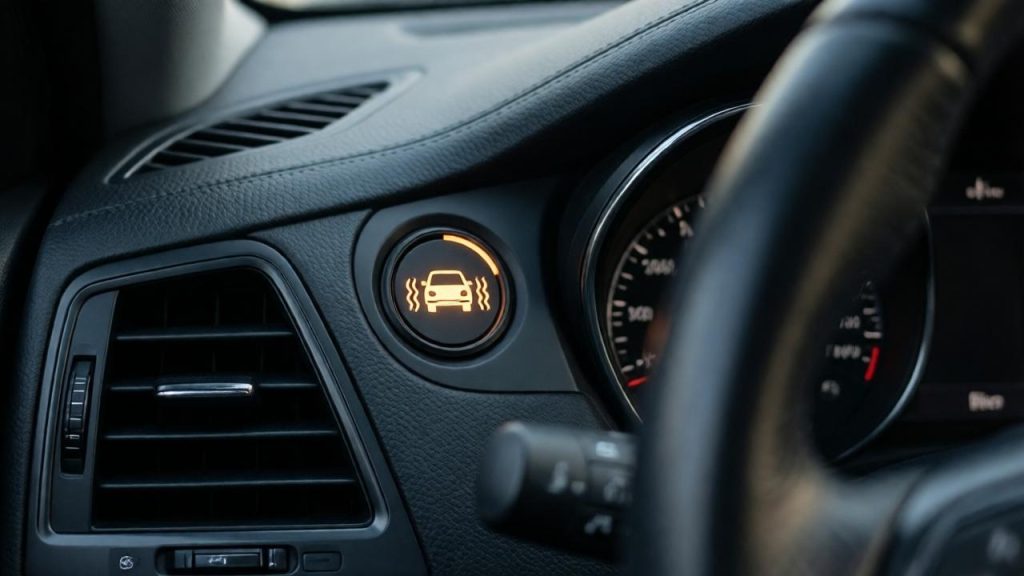
A vehicle’s dashboard presents a myriad of symbols and controls. Among them is a frequently neglected button depicting a small car with curved lines—a feature often misunderstood. For drivers, particularly those over 50, understanding this button’s purpose and optimal usage is incredibly valuable.
What Does the Button Do?
This control temporarily disables or modifies your car’s electronic stability or traction control system. In essence, this technology manages the vehicle’s behavior when a wheel loses grip or the car begins to skid. It stabilizes the automobile by applying brakes to specific wheels or reducing engine power.
Simple Explanation
Picture a tire slipping on a slick, wet surface. The system senses this loss of traction and responds by either cutting engine output or braking individual wheels to help the vehicle regain composure. The dashboard button lets you deactivate this assistance temporarily, typically by pressing and holding it or with a single press.
When and Why Is It Useful?
For most everyday driving scenarios, keeping stability and traction control active provides subtle, beneficial support. Nevertheless, certain circumstances exist where switching it off can be advantageous.
Useful Situations
If your car becomes stuck in deep snow, thick mud, or on very loose terrain, a controlled amount of wheel spin can help you escape. In these instances, the system actively prevents such spinning, potentially hindering your progress. The same logic applies when attempting to climb an extremely steep, slippery driveway; consider turning it off until you reach firmer ground.
For spirited driving on closed circuits or under specific testing conditions, deactivation might also be required. However, such needs are uncommon during regular road use.
Common Misunderstandings
Numerous assumptions circulate about this control. Several are inaccurate and can create confusion.
Popular Myths
A widespread belief is that disabling the system leads to significantly better fuel economy. In real-world daily driving, the impact on consumption is negligible. Another misconception is that an active system completely takes over vehicle control. Actually, it merely assists and does not absolve the driver of responsibility.
Some think the button itself is a malfunction indicator. This is false; if a system fault occurs, a separate warning light typically illuminates on the instrument cluster, often accompanied by a display message. The button is primarily a manual override for temporary deactivation.
Practical Safety Tips
A few straightforward guidelines can help you use this function properly and maintain safety on the road.
Before Driving
While parked in daylight, locate the button and understand the related warning symbols. Quickly consult your owner’s manual to see how your specific model operates the system, as procedures can differ between vehicles.
While Driving
For normal conditions, leave the system activated. It operates discreetly in the background. If you encounter a very slippery road, the correct response is to reduce speed and drive with extra care, not to switch off the control.
In Case of Getting Stuck
If you find yourself stuck, first attempt basic techniques: gentle acceleration, rocking the vehicle, or using traction aids under the wheels. If these fail and wheel spin is necessary, you may temporarily deactivate the system. Remember to reactivate it immediately afterward.
Regular Maintenance
Ensure your vehicle receives regular check-ups. Modern driver aids function most effectively when components like brakes, tires, and sensors are in excellent condition.
Many experienced drivers value features that simplify driving. The button in question isn’t a mere luxury; it’s a functional control that, when used appropriately, enhances daily safety. Knowing its purpose and following a few simple rules allows you to benefit from its advantages while staying firmly in command.