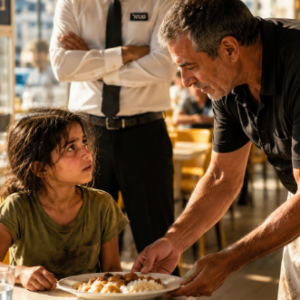
The rustle of a brown paper bag was a familiar sound in the noisy cafeteria. James unzipped his lunch bag and, like every day, found a bounty meant for two. His mother’s love was measured in extra sandwiches and fruit. His eyes scanned the room, a daily ritual, until they landed on her. Olivia. She sat alone, her tray conspicuously empty, her posture a fortress of quiet pride. Without a second thought, he walked over, placed half his food in front of her, and broke the silence that had become their routine. “My mom always packs too much,” he said, his voice a casual offering against the din of clattering trays.
She looked from the food to his face, her expression guarded. “I do not need your pity.” Her words were sharp, a defense forged in shame. James simply sat down across from her, unfazed. “Good,” he replied, “because I’m just sharing. Eat up.” A silent battle waged in her eyes—hunger versus dignity. After a tense second, dignity conceded. She ate. He came back the next day. And the day after. Every single day, without fail, a silent pact was honored over a divided lunch.
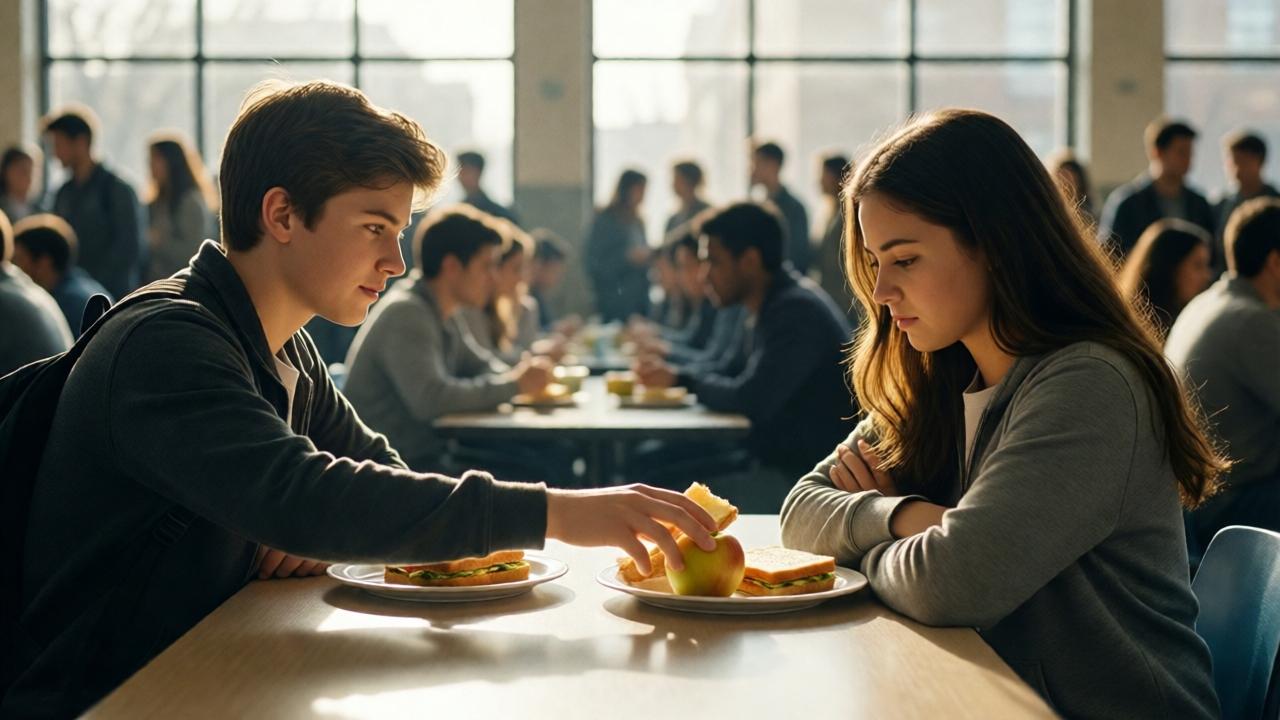
The unspoken understanding between them deepened one afternoon. The cafeteria was quieter than usual. Olivia stared at her hands, her voice barely a whisper. “My dad got laid off. Some days… there is just nothing at home.” She stopped, as if the admission had cost her dearly. James nodded slowly, pushing the food closer, an act that now meant more than sharing. It meant listening. “I never wanted anyone to know,” she finished. He met her gaze. “I’m James, by the way.” A faint, real smile touched her lips. “Olivia.”
Then, one Monday, the pattern shattered. Olivia’s seat was empty. James sat with two portions and a hollow feeling. She never came back. He asked, but no one knew. The mystery of her disappearance became a quiet ache, a chapter ended mid-sentence. Life moved on, but the memory of the girl with the empty tray lingered in the back of his mind, a lesson in quiet struggle.
Fifteen years later, the struggle was his. James walked into a sleek downtown office building, his dress shirt crisp, his resume a testament to eight months of relentless job hunting. This interview was his last real shot. He poured his heart into every answer, shook hands firmly, and walked out into the lobby elevator, the weight of uncertainty pressing down. Alone, his eyes red with exhaustion, he fought to hold himself together. The elevator doors began to close.
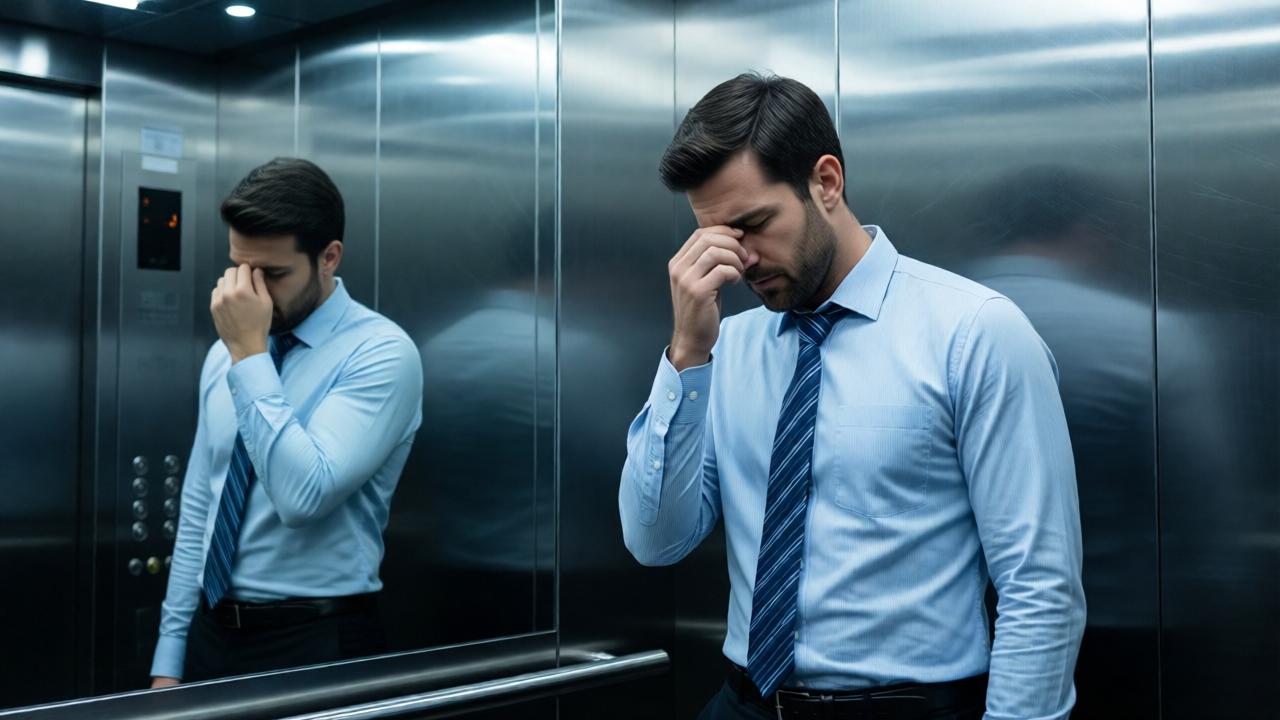
A woman stepped in quickly, her heels clicking on the floor. She glanced at him, then looked again, her gaze intensifying. “Did you go to Jefferson High?” James looked up slowly, the question pulling him from his thoughts. Her voice softened. “You used to put food in front of me every day. You said your mom always packed too much.” He stared, the years melting away. She smiled, tears glistening. “I was the girl with the empty tray.” His breath caught. “Olivia,” he whispered.
Her eyes filled immediately. “My mom relocated us suddenly. I never got to say goodbye. I never got to say… thank you, James.” The doors opened on the lobby, but Olivia didn’t move to exit. Instead, she turned decisively. “Come with me.” She walked him back through the building, past the curious receptionist, past the waiting room full of anxious candidates, all the way to the corner office at the end of the hall. This was her domain.

Olivia picked up her desk phone, her voice clear and commanding. “Can I get everyone in the main conference room right now, please?” She hung up and turned to James, the ghost of that hungry girl completely gone, replaced by a woman of assured power. “The interview panel is waiting,” she said, a new warmth in her eyes. “But I think we can skip the formalities. That seat across from me has been empty for too long. How would you like to work here?” In that moment, a kindness offered in a school cafeteria, paid forward across a decade and a half, finally found its way home.