In the autumn of 1943, the draft notice arrived for Michael Dean, a 20-year-old farm boy who knew more about sowing seasons than firing squads. The world was at war, and life, as he knew it, was over. “I don’t understand,” he confessed to his father the night before he left, staring at the calloused hands that had only ever held tools of life, not death. “Why do I have to go shoot people I’ve never met?” His father, a veteran of the last war, simply put a heavy hand on his shoulder, his silence more terrifying than any answer.
The confusion turned to sheer terror one pitch-black night behind enemy lines. Michael’s unit was sent on a reconnaissance mission that turned into a hellish trap. The ambush erupted without warning—a staccato of rifle fire punctuated by earth-shattering explosions that lit the night with a grotesque, orange glow. Men screamed, orders were drowned out, and the world dissolved into chaos. Then, a concussive blast threw Michael to the ground. When the ringing in his ears subsided and the acrid smoke cleared, he made a horrifying discovery: he was utterly alone. The cratered landscape was silent but for the crackle of distant fires. He was the only one left breathing.
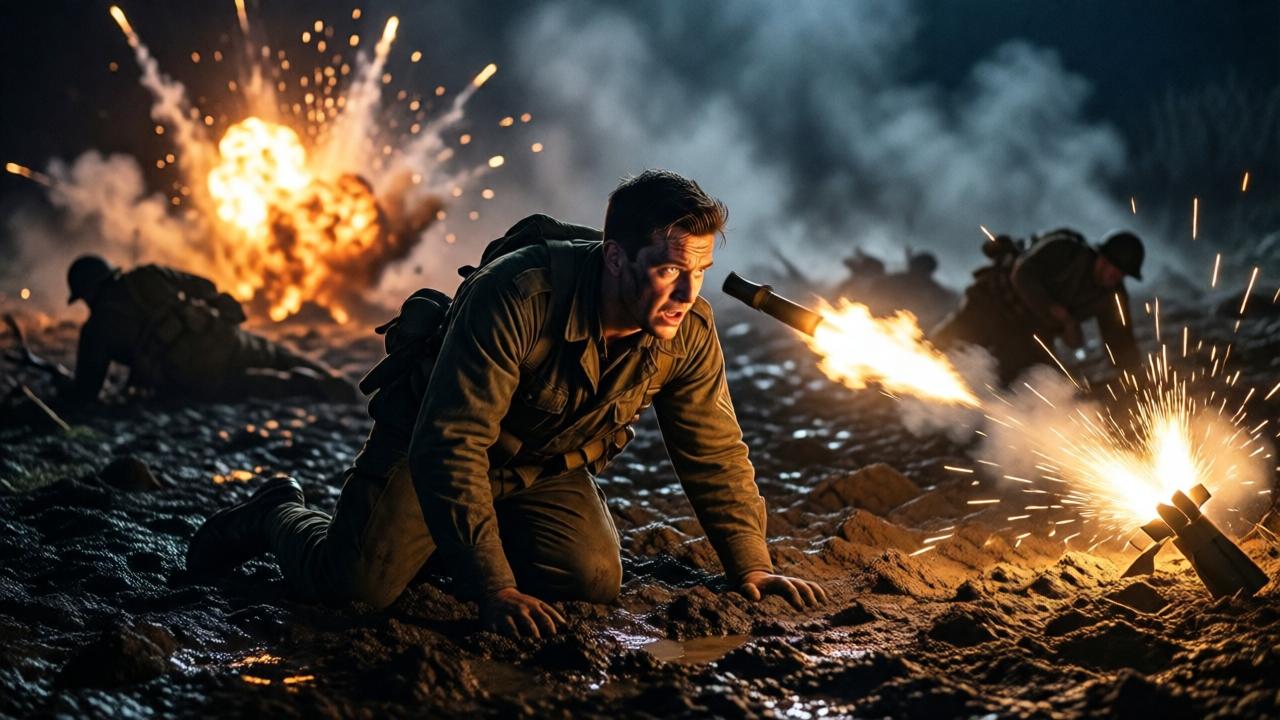
Crawling through the muck, he found refuge in a larger crater, about seven meters across. There, he found the body of a fallen comrade. In that moment of primal survival, a desperate, irreversible idea took hold. With trembling fingers, Michael Dean reached into the dead man’s pocket, retrieving his paybook and identity disc. He then placed his own documents and dog tag on the anonymous soldier. In the eyes of the army, and the world, Michael Dean had died in that crater. In his place stood Luke Pfeiffer, a ghost with a borrowed name. As he fled, scenes from his old life—a life of petty crime and running from shadowy figures in city alleys—flashed before him. That reckless street urchin was now truly dead and buried.
The new Luke Pfeiffer was discharged due to wounds and sent to a hospital in a city far from his provincial home. He pasted his own photo into the stolen documents, and a new man was born. The years that followed were a fragile peace. He built a life: a gentle wife, a son he adored, a quiet job. For thirty-five-year-old Luke, the war was a closed chapter, a bad dream belonging to another man. He almost believed it himself.
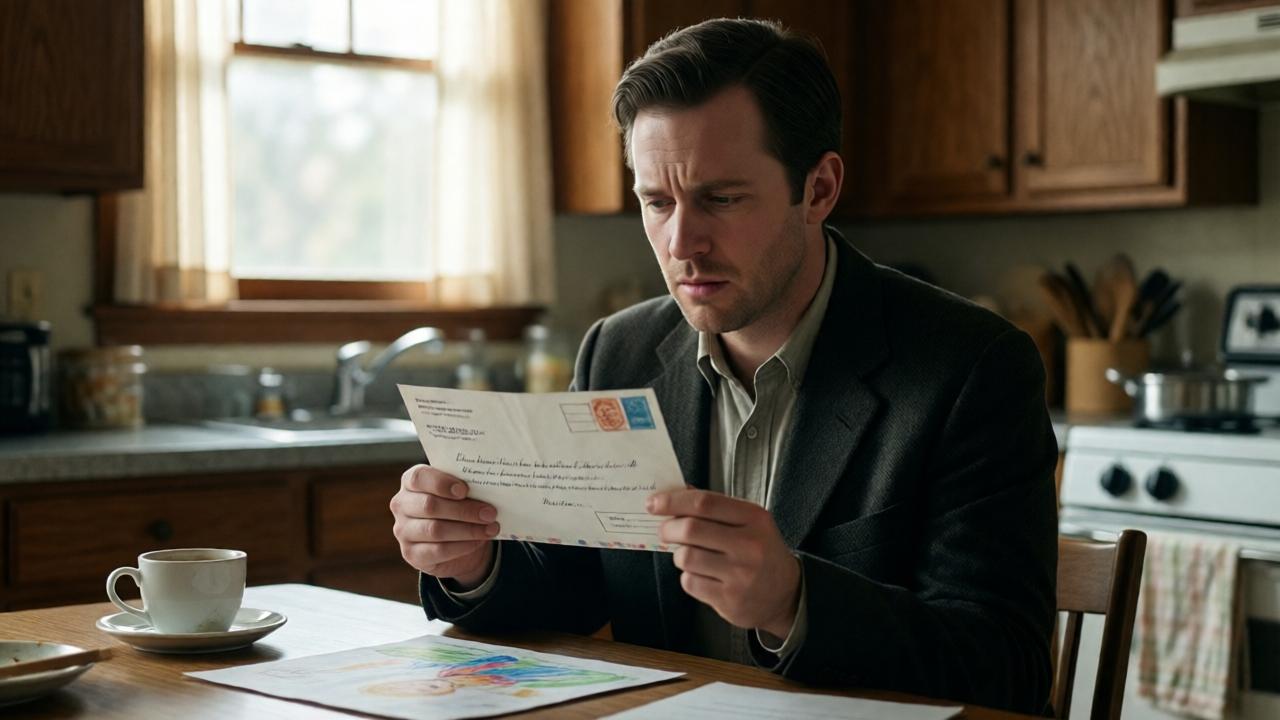
That illusion shattered the day his wife handed him a registered letter. The official stamps were like brands on the envelope. His heart hammered against his ribs as he took it with unsteady hands. “What is it, dear?” his wife asked, but her voice sounded miles away. He hadn’t forgotten. The image of the soldier in the crater, now bearing his name, flashed before him with cruel clarity. He read the first lines: ‘You, Luke Pfeiffer, are summoned to the Military Police Investigation Department for identification purposes…’ The past had not been buried; it had merely been waiting.
- The borrowed identity that gave him life now threatened to destroy everything he built.
- The ghost of Michael Dean, the street urchin and deserter, was clawing its way back to the surface.
- The fear was no longer of enemy soldiers, but of his own reflection and the knock on the door.
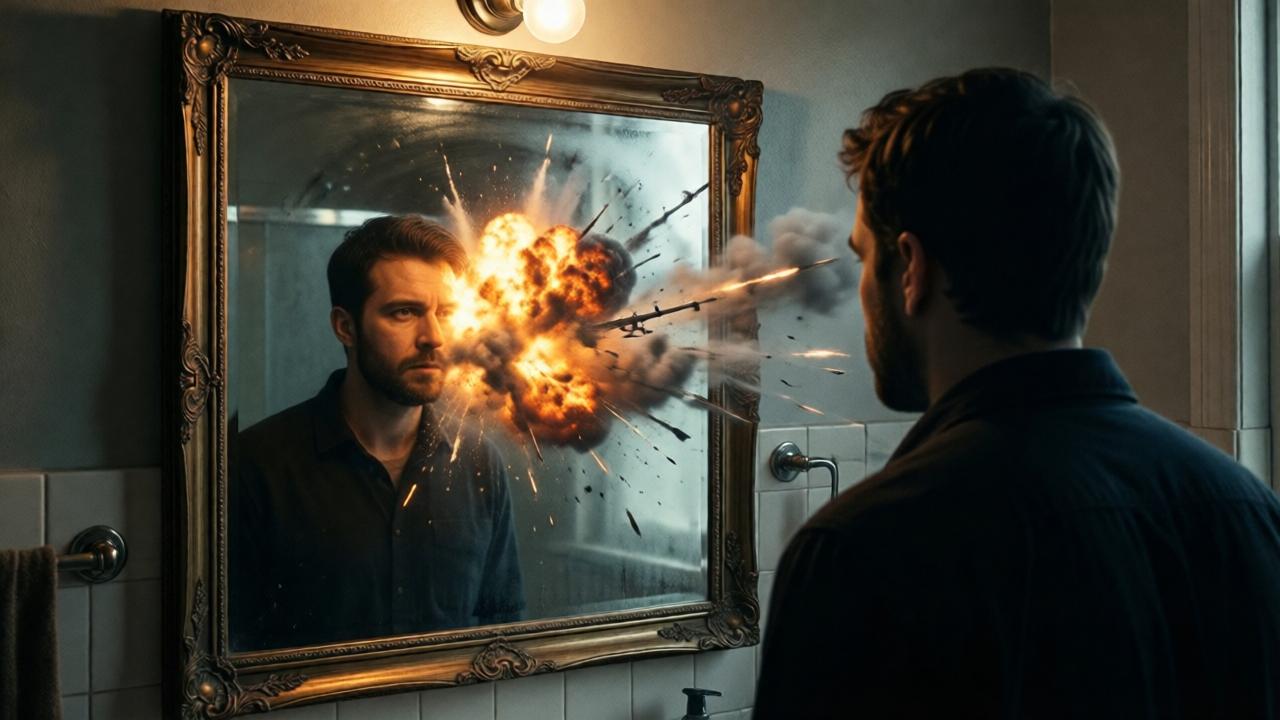
The guilt and fear, dormant for years, erupted with volcanic force. It ate at him, tormenting him with visions of military police and his family’s disgrace. He could hide from the world, but not from himself. In a final, resolute act of a man torn in two, he walked to the bathroom. He looked at the radiator on the wall, then at the cord in his hand. He tied one end, his movements methodical. He threw the other end over the pipe, then caught his own gaze in the mirror above the sink. But he did not see Luke Pfeiffer, the family man. He did not see Michael Dean, the farm boy. He saw only the blinding, powerful explosion from that long-ago night, clouding the mirror, the room, and every thought until there was nothing left at all.
In the end, the ambush in the field had only been the beginning. The true, decades-long siege was waged within his own mind. The letter was merely the final shell. When they found him, the investigation would likely close a cold case: Luke Pfeiffer, deceased. And somewhere, in a forgotten field in Europe, a grave marked ‘Michael Dean’ would keep its secret forever. Both men were finally, truly, gone.