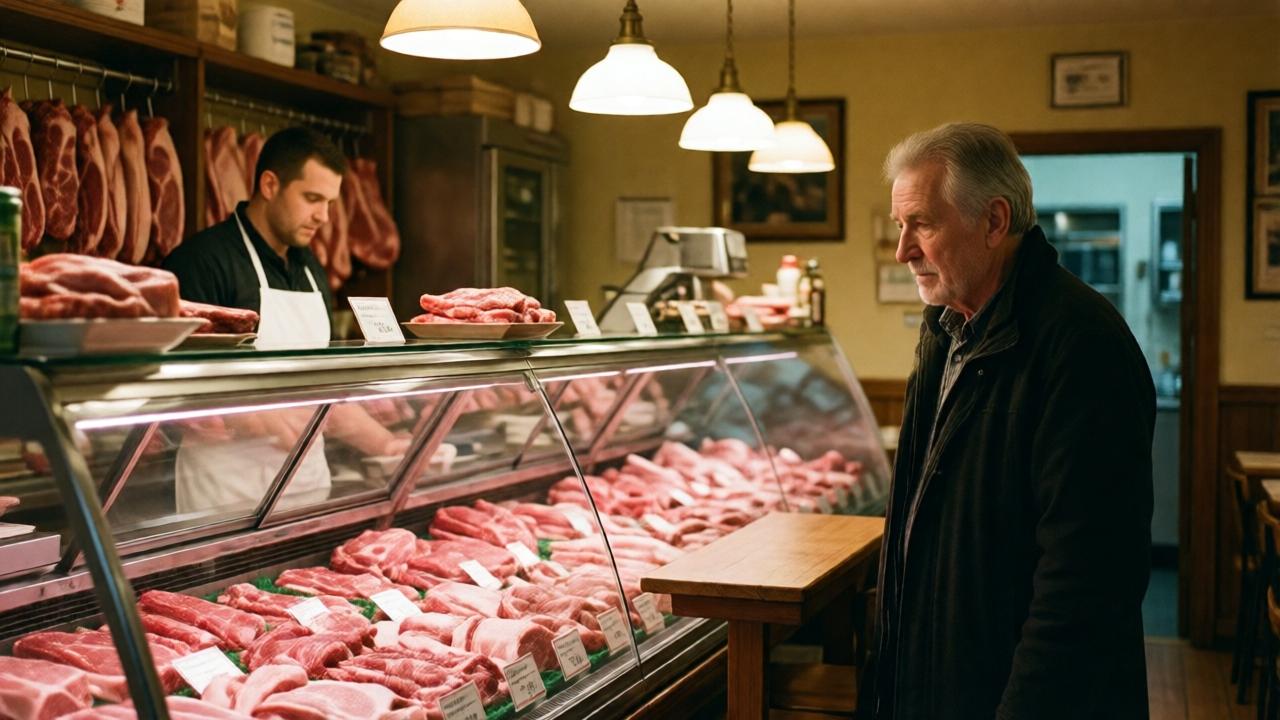
The bell above the door jingled softly as an elderly man stepped into the butcher shop. He was about 65, with graying brown hair and a calm demeanor. The young butcher behind the counter, around 30 years old and wearing a crisp white apron, greeted him with a welcoming nod. The shop was cozy, with glass cases displaying cuts of meat, a wooden counter worn smooth by years of use, and price tags dangling from hooks.
“Good morning! What can I get for you today?” asked the butcher, wiping his hands on a cloth. The old man scanned the display case, his eyes thoughtful. “I don’t eat pork,” he said slowly. “I wouldn’t want to disappoint you, but we were only delivered pork today. What about beef?” The butcher shook his head. “No, only pork.”
“That’s a pity—I don’t eat pork,” the old man said, but his tone was not angry. The butcher, curious, leaned forward. “I’m not religious myself, but I understand and respect your religious feelings,” the man continued. The butcher frowned. “What do religious feelings have to do with it?” “Well, you’re probably Jewish?” the old man asked. “No.” “Muslim?” “No.” “Oh, they don’t eat pork either?” The butcher laughed softly. “No, I’m not religious. I just don’t eat pork for a different reason.”
“I didn’t know that,” the old man said, his voice dropping. “I don’t know about others, but I have a serious reason not to eat pork. Once, a pig saved my life.” The butcher’s eyes widened. “Really?” The old man nodded, a distant look in his eyes. “I was five years old. I spent the summer in the countryside.”
- One day, far outside the village, I fell into a pit.
- It was a remote place. I broke my leg when I fell.
- I shouted for a long time, called for help. Then I ran out of strength.
- They might have found me only half a year later—or rather, what would have been left of me.
“But they could have found you by evening, right?” the butcher asked, leaning on the counter. The old man shook his head. “That’s the thing—they couldn’t.” “Why?” “Because nobody cares about anything!” The butcher was silent for a moment, then asked, “So what happened next? How did you get out?”
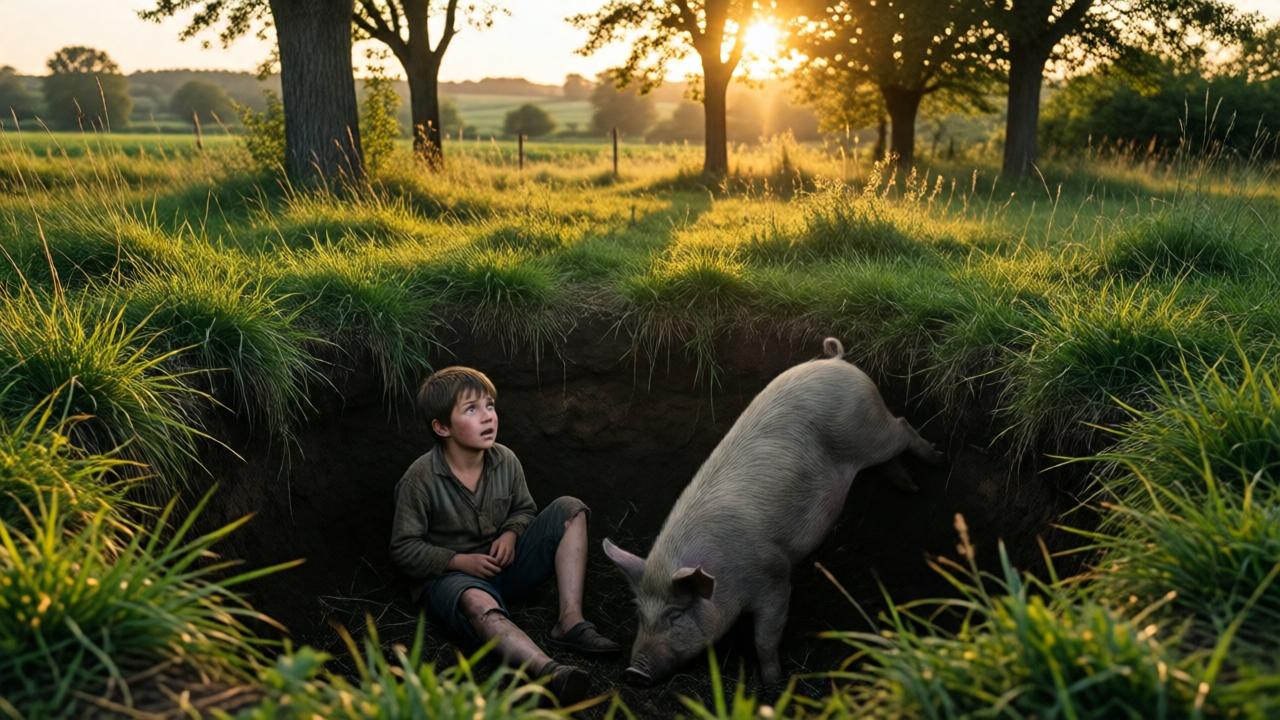
“Around that time, they were planning to slaughter a pig in the village. But it was a smart and nimble pig. It broke free and ran away. The whole village chased it for several hours. In the end, it fell into the pit where I was. That’s how they found me.” The butcher’s jaw dropped. “Wow.”
“Since then, I don’t eat pork. So the pig saved my life.” The old man’s eyes were moist. The butcher hesitated, then asked, “What happened next? They pulled me out. My leg healed.” He paused. “No, I mean the pig.” The old man looked down. “Oh—they ate it.” There was a long silence. “That’s sad,” the butcher whispered.
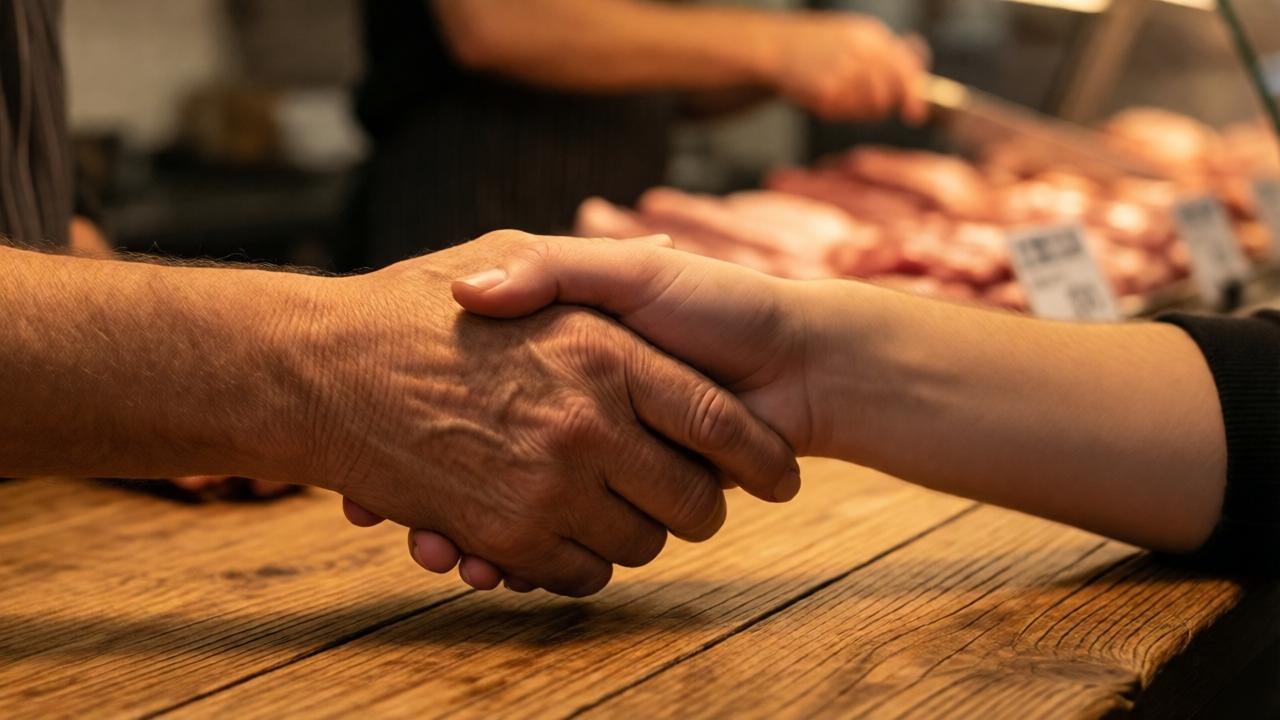
The young butcher finally broke the silence. “I have some beef in the back. It’s not on display, but I can cut you a nice steak if you’d like.” The old man looked up, a grateful smile crossing his face. “That would be wonderful. Thank you.” As the butcher disappeared into the back room, the old man touched the counter gently, thinking of a pig that had once saved a little boy’s life—and of the village that had eaten it anyway.