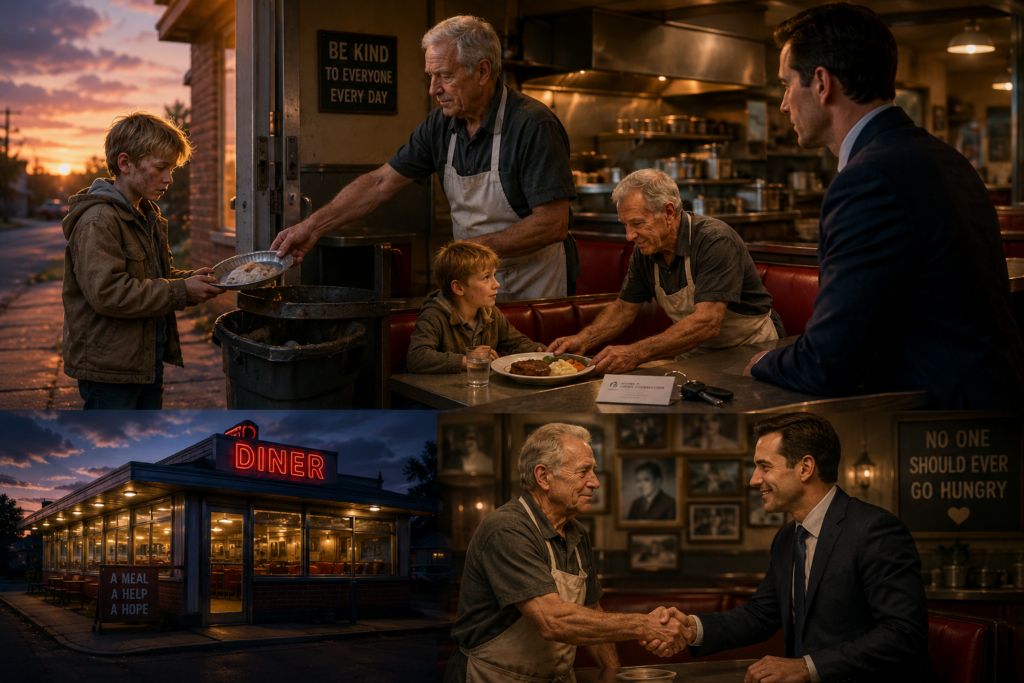
The diner stood on the outskirts of the city, where by evening the streets became almost empty and the sunset light laid a warm golden glow across the walls. Near the back entrance there was a large plastic trash container, overflowing with boxes and bags. In this quiet place, a boy about ten years old stood motionless. He had light, tousled hair, freckles on his face, a beige jacket, and a grey hoodie. In his hands he held a metal plate with food crumbs, staring at it as if it were all he had left.
An elderly owner of the diner approached him — a tired man with short grey hair and a dirty white apron. He silently took the plate from the boy’s hands, emptied the remaining food into the trash container, and calmly said: “That is not fit to eat. It is not for you.” The boy lowered his gaze, not understanding why even these crumbs were taken from him, but the old man did not look angry — rather very calm and certain. He simply opened the kitchen door and gestured for the boy to come inside.
Inside the diner it was warm and smelled of fresh food. A few minutes later, a hot plate appeared in front of the boy with steak, mashed potatoes, and carrots. The old man gently said: “Here you are! You can eat now.” At first, the boy did not move, as if afraid everything might disappear, but then he sat down and began eating slowly and carefully, as if it were the most important moment of his life.
The next day he came again. This time he sat in a red booth inside the diner and ate the same food, but without fear. At one point tears appeared in his eyes, and he quietly said: “I will never forget what you did.” The old man was working in the kitchen at that time and did not answer, as if for him it was something ordinary — just feeding a child.
But that day, another person entered the diner — a man in his mid-thirties wearing an expensive dark blue suit with a gold ring. He silently observed everything that was happening, then approached the counter, placed car keys and a white card on it, and left without saying a word. No one yet understood that this would change everything.
A few days later, the diner began to change. New opportunities appeared, along with help and money for development. The man with the card turned out to be the owner of a charitable foundation who decided to support the place after what he had seen. The diner was no longer just a small eatery — it became a place where people in need were fed and supported. The boy kept coming, eating, learning, and slowly returning to a normal life.
Years passed. The diner became brighter and renewed, yet it kept its heart. The old man grew older but continued working there, only now not alone. And one day, the door opened again. An adult man in an expensive but calm suit entered. He approached the counter, looked at the old man, and quietly said: “That is not fit to eat. It is not for you.” The old man froze — in front of him stood the same boy.
The man placed documents on the counter and said that this place would now continue to grow, turning into a chain of diners where no one would go hungry. In the evening, when a hungry child approached the door again, the old man no longer hesitated. He threw the leftover food into the trash and said: “That is not fit to eat. It is not for you.” Then he added softly: “Come on, I’ll feed you.” And the diner opened its doors again — for a new story that was only beginning.