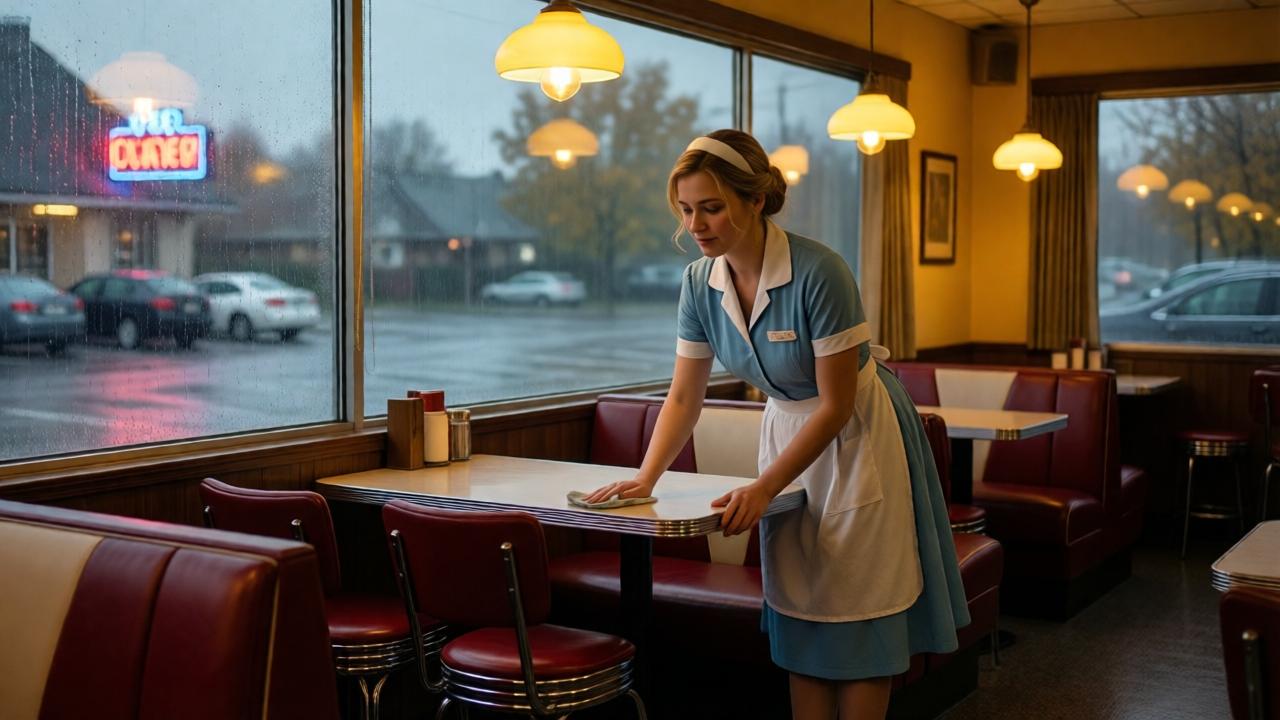
The rain hammered against the fogged-up windows of Maggie’s Diner, turning the sleepy town into a watercolor blur of gray and muted colors. Inside, the warm amber glow of incandescent lamps bathed the chrome stools and red leather booths in a nostalgic 1950s charm. The air was thick with the comforting aroma of fresh coffee and the faint hum of an old jukebox playing a forgotten tune. For Emma Blake, a 25-year-old waitress with tired but kind eyes and a cascade of light blonde hair tied back in a messy ponytail, it was just another quiet morning shift. She wiped down a table by the window, her white apron slightly wrinkled from hours of work, and stared out at the empty parking lot. The neon sign outside flickered red and blue, its reflection shimmering on the wet asphalt like a silent lighthouse in a storm.
“You look like you’re carrying the weight of the world on those shoulders,” said old Martha, the cook, from behind the counter. Emma forced a smile, but her mind was elsewhere. She had been working double shifts for months, saving every penny to pay for her younger brother’s medical bills. The diner was her sanctuary, a place where she could escape the crushing reality of hospital waiting rooms and mounting debts. But even here, the loneliness crept in like the damp chill from outside. She sighed and reached for another coffee cup to refill, when something caught her eye—a movement in the rain, dark and deliberate, cutting through the gray monotony.
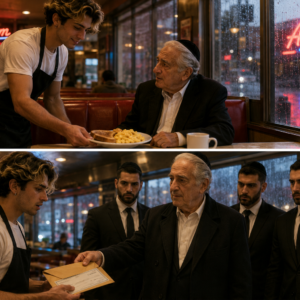
Emma’s breath caught in her throat as two black luxury SUVs glided into the parking lot, their headlights cutting through the rain like twin blades. The vehicles stopped in perfect alignment, their doors opening in unison. Three athletic men in black suits and leather gloves stepped out, their movements crisp and professional. They ignored the rain soaking their shoulders and opened the rear door of the lead vehicle. A figure emerged—an elderly man with silver hair combed back neatly, wearing an impeccably tailored dark coat. He stood tall and confident, no longer the frail old stranger who had stumbled into the diner weeks ago, soaking wet and trembling, with nowhere to go.
“Walter,” Emma whispered, recognizing the man who had spent two hours at a corner booth that stormy night, sipping coffee and talking about lost time and broken dreams. She had given him a free slice of apple pie and listened to his rambling stories until the rain stopped. He had thanked her with a gentle smile and left a crumpled five-dollar bill on the table. She never expected to see him again. But now, as the diner door swung open and the three men took silent positions behind him, Emma felt her heart pound against her ribs. The jukebox seemed to grow quieter, the rain louder, and the air thicker with unspoken tension.
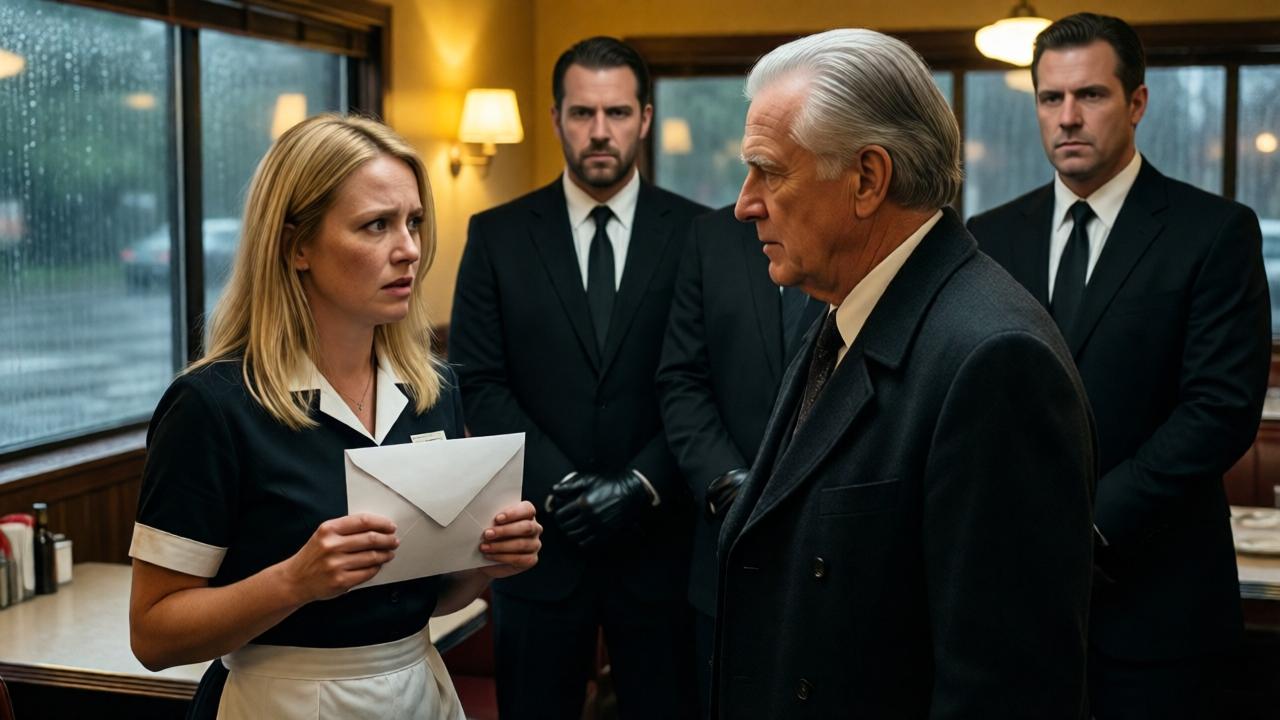
“You changed more lives than you know,” Walter said, his voice calm and steady, carrying the weight of authority and gratitude. He walked toward Emma, his polished shoes clicking on the linoleum floor. The men behind him stood like statues, their eyes scanning the room but never settling on her. Walter reached into his coat and pulled out a thick envelope, holding it out to her with both hands. Emma’s hands trembled as she took it, her fingers brushing against the heavy paper. She looked up at him, confusion and fear flickering in her eyes. “What is this?” she managed to whisper.
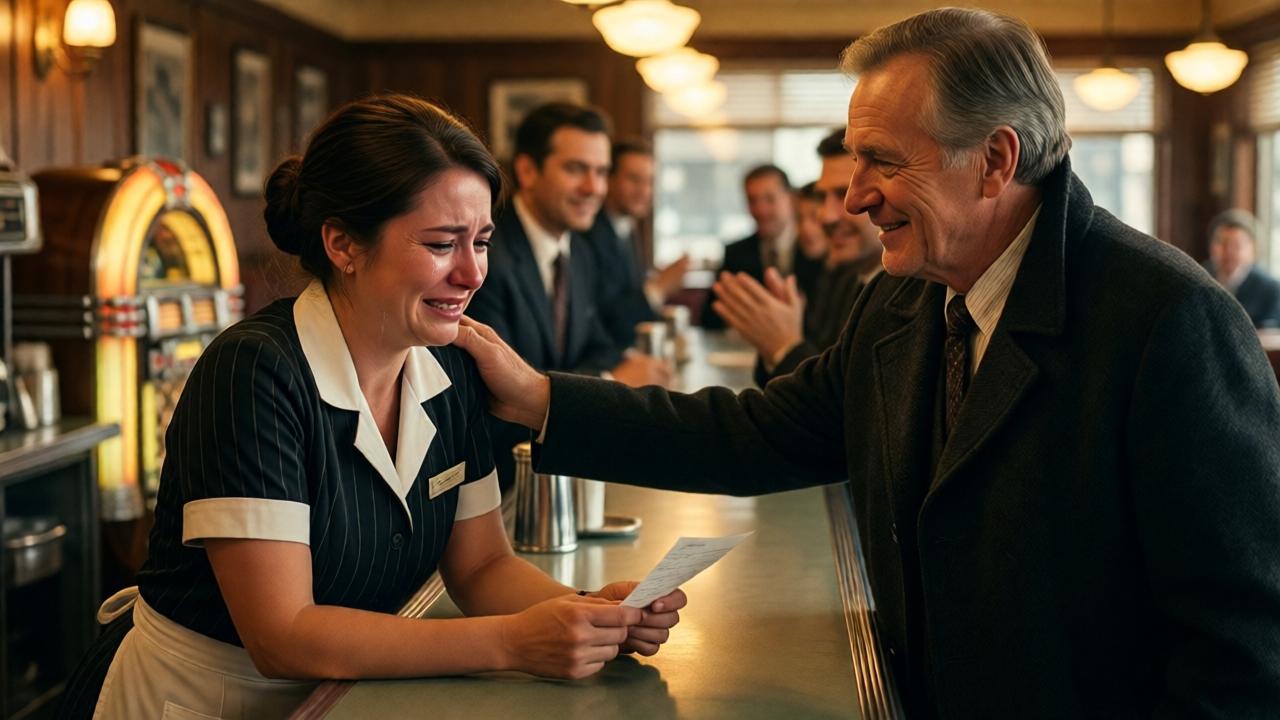
“Open it,” Walter said gently. Emma’s fingers fumbled with the seal, and when she finally pulled out the contents, her eyes widened. It was a check—a check so large that the zeros seemed to stretch across the paper like an impossible dream. Her knees buckled, and she grabbed the edge of the counter to steady herself. “Oh my God…” she breathed, tears streaming down her cheeks. Walter placed a hand on her shoulder, his touch surprisingly warm. “That night you gave me a slice of pie and listened to an old man’s regrets, you reminded me that kindness still exists. I’ve spent years building an empire, but I forgot what it meant to be human. You gave that back to me.”
Emma looked at the check again, then at Walter, her voice breaking. “But… I just did my job. Anyone would have done the same.” Walter shook his head slowly. “No, Emma. Not anyone. You saw a stranger and treated him like family. That’s rare. That’s priceless.” He gestured to the men behind him. “My team has already arranged for your brother’s medical bills to be paid in full. The rest is for you—a new start, a new life. Use it to chase your own dreams for once.” Emma sobbed openly now, burying her face in her hands. The diner’s regulars, who had been watching in stunned silence, began to clap softly, their applause growing into a warm, collective cheer.
As the rain began to lighten outside, the first rays of sunlight broke through the clouds, casting a golden glow through the diner’s windows. Walter tipped his hat to Emma and turned to leave, his men falling into step behind him. At the door, he paused and looked back. “Remember, Emma, the world is full of storms. But you are the kind of person who brings the sun.” He smiled one last time and stepped out into the fading rain. Emma watched the SUVs drive away, the envelope pressed tightly against her chest. She knew that nothing would ever be the same again—and for the first time in years, that thought filled her not with fear, but with hope.
- Kindness, even in small gestures, can have a profound impact on others.
- Never underestimate the power of truly listening to someone.
- Every person you meet is fighting a battle you know nothing about.
- Sometimes, the greatest gifts come from the most unexpected encounters.
- A single moment of compassion can change a life forever.