
Bread serves as a fundamental food item for countless households. Many individuals, particularly seniors, value having access to fresh, flavorful bread. Yet, it’s a common frustration when bread begins to develop mold rapidly, leading to unnecessary food waste. This guide will explain the primary reasons behind quick mold formation and provide effective methods for storing bread in a bread box to maximize its shelf life.
Understanding Why Bread Develops Mold
The appearance of mold on bread is triggered by microscopic mold spores that are omnipresent in our environment, landing on food surfaces. These spores thrive and multiply when they encounter ideal growing conditions.
Key Factors That Accelerate Mold Growth
- Moisture Content: Bread naturally contains water. An excessively humid storage environment creates a perfect breeding ground for mold.
- Ambient Temperature: Warm surroundings significantly speed up the mold formation process compared to cooler storage areas.
- Airflow: Poor ventilation inside a storage container traps moisture, which encourages spore development.
- Duration of Storage: The longer bread is kept, the higher the probability that mold will eventually appear.
Mastering Bread Storage in a Bread Box
Utilizing a bread box is a classic and reliable approach for preserving bread. However, simply placing bread inside any box doesn’t guarantee long-lasting freshness. Correct usage is essential for success.
Selecting an Effective Bread Box
An ideal bread box should possess these important features:
- Adequate ventilation holes or gaps to allow excess moisture to evaporate.
- Constructed from breathable materials such as wood, ceramic, or certain metals that help manage humidity.
- Appropriate internal dimensions so the loaf isn’t cramped, which can cause undesirable pressure marks.
Essential Tips for Bread Box Storage
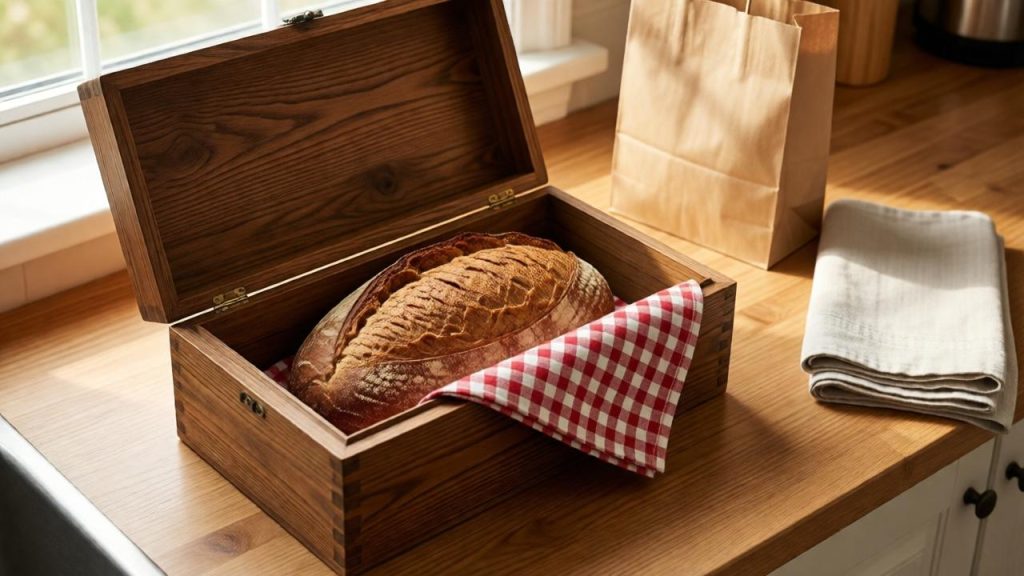
- Cool Completely: Always allow freshly baked or store-bought bread to cool down entirely before placing it in the box. Residual heat generates condensation and moisture.
- Use a Breathable Wrap: Encase the loaf in a clean linen cloth or a paper bag. This method prevents excessive drying while maintaining optimal humidity levels around the bread.
- Maintain Cleanliness: Regularly wipe out or wash the bread box to eliminate any lingering mold spores and crumbs.
- Pre-Slice for Convenience: Slicing the entire loaf beforehand allows you to remove individual pieces without repeatedly exposing the whole bread to air.
Alternative Bread Storage Methods
Beyond the traditional bread box, several other storage options exist. The best choice depends on your kitchen environment and how long you need to keep the bread fresh.
For Short-Term Storage (1-2 Days)
- Keep bread in your bread box or in the paper bag it came in.
- Avoid the refrigerator, as the cold temperature accelerates staling, making bread go hard faster.
For Medium-Term Storage (Several Days)
- Freezing is highly effective: Slice the loaf, place it in an airtight freezer bag or container to prevent freezer burn.
- Thaw slices at room temperature or toast them directly from frozen for a quick revival.
Final Thoughts
Rapid bread molding is typically a result of excess moisture, poor air circulation, and suboptimal storage conditions. For many, especially older adults, knowing how to properly use a bread box is key to avoiding premature spoilage. A well-ventilated box that is cleaned frequently will help your bread stay fresh longer. Wrapping the bread in linen or paper and storing it at stable room temperature, away from heat and direct sunlight, creates the perfect preservation environment. By following these straightforward guidelines, you can significantly reduce food waste and savor delicious, fresh bread every day.