
The air inside Aurelius Watches on Fifth Avenue was a curated blend of silence and opulence. Glass cases gleamed under soft, golden lighting, each cradling a timepiece whose price tag could rival a suburban home’s mortgage. It was a sanctuary of wealth, pristine and predictable—until the door’s gentle chime announced an unexpected visitor. A Black man stepped inside, his presence a stark contrast to the polished marble and brass. His jacket was slightly torn at the sleeves, his jeans faded with a small rip near the knee, and his shoes bore the scuffs of a long journey. A worn backpack rested on his shoulder. Yet, he stood with a quiet, unshakeable dignity, simply observing the room.
Head salesperson Ethan Cross looked up from a velvet tray, his practiced smile vanishing into a frown of disdain. “Sir,” he said, his voice cold enough to frost the display glass, “you need to leave.” The man met his gaze steadily. “I’d like to buy a watch,” he replied. A short, derisive laugh escaped Ethan, who then glanced at his colleagues as if sharing a private joke. “Did you hear that? He wants to buy a watch.” His eyes flicked to the frayed edge of the man’s sleeve. “This is Aurelius Watches,” he declared, voice dripping with condescension, “not a shelter. Our pieces start in the six figures.” A tense hush fell. Other affluent customers stared, and a whisper cut through the air: “Security should handle this.”
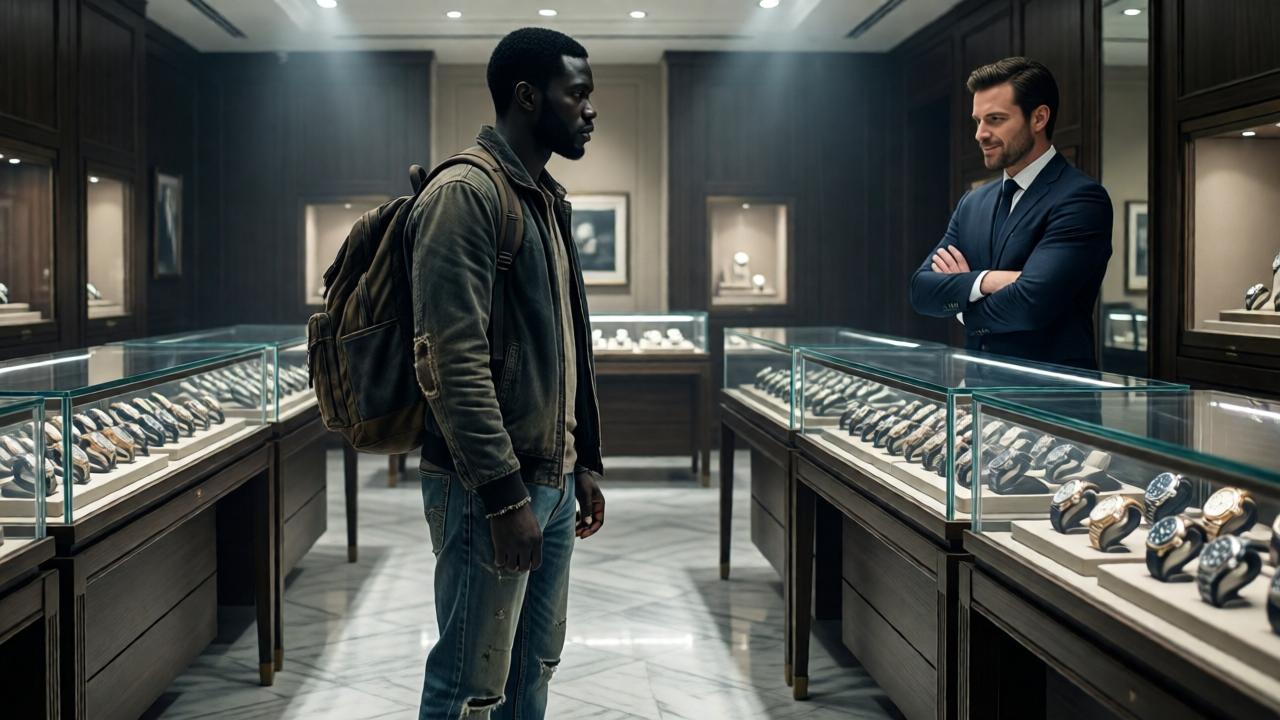
“I have money,” the man said, his calm unwavering amidst the rising hostility. “Sure you do,” Ethan sneered, nodding to the security guard, Mark, who stepped forward. Just as Mark moved to escort him out, a young voice broke the standoff. “I’ll help him.” All eyes turned to Rachel Morgan, the newest sales associate, her face a mask of determined empathy. Ethan grabbed her arm. “He’s wasting your time,” he hissed. “He’s a customer,” Rachel stated firmly, pulling her arm free. She turned to the man. “Sir, what would you like to see?” Ethan shook his head in disgust. “When you lose your job,” he warned, “remember I told you so.”
Ignoring the threat, Rachel led the man to a central display. “This is our flagship complication, the Aurelius Celeste,” she said, her voice respectful. “Would you like to try it on?” The man nodded, and as she carefully lifted the masterpiece from its cushion, his eyes welled with tears. It wasn’t a reaction to the watch’s beauty, but to her simple humanity. “Thank you,” he said softly, the words heavy with emotion, “for treating me like a human being.” In that moment, the store’s icy atmosphere began to thaw, replaced by a palpable sense of shame from some onlookers and admiration for Rachel’s courage.
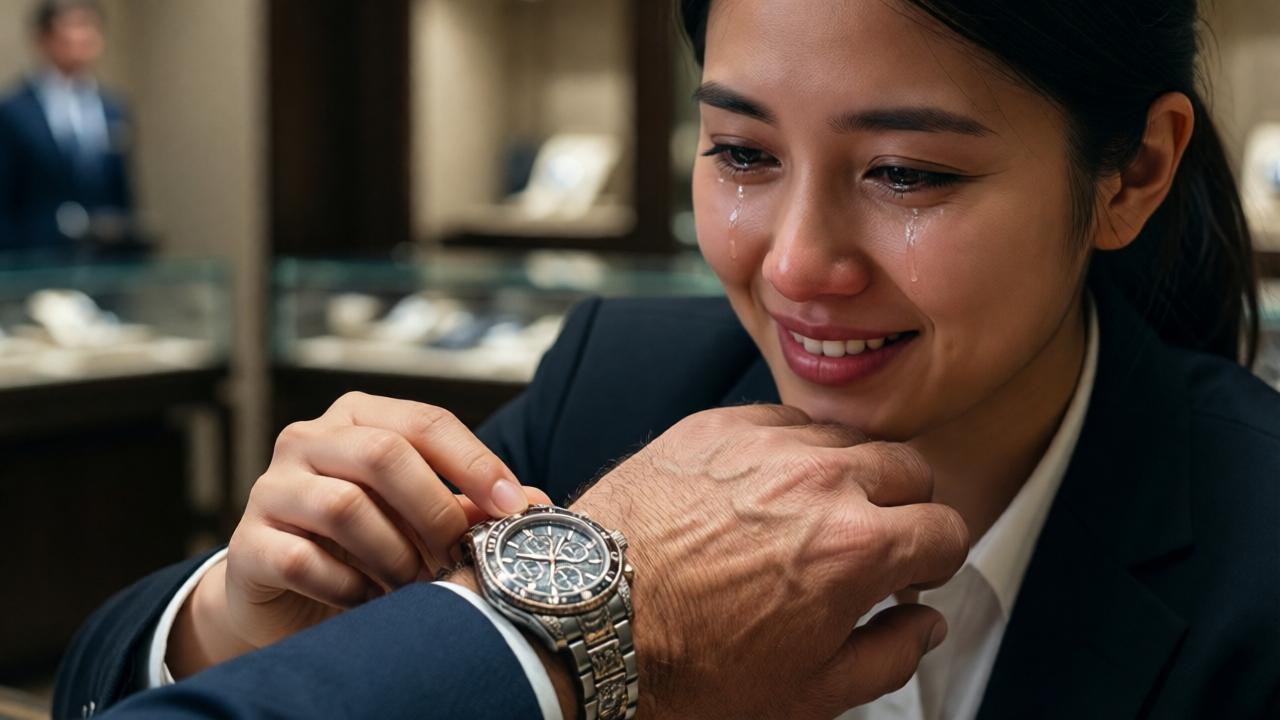
Then, a voice, sharp with disbelief, cut through the quiet murmur. “Rachel Morgan.” Everyone turned. Charles Whitmore, the reclusive owner of Aurelius, stood frozen in the doorway of his private office, his face as pale as the mother-of-pearl on a dial. All conversation ceased. He walked slowly across the floor, his eyes locked not on the million-dollar watch, but on the man wearing it. The air crackled with unspoken history. He stopped a few feet away, his voice barely a whisper, cracking with a decades-old recognition. “Marcus?”
The man—Marcus—looked up, a sad, knowing smile touching his lips. The story that unfolded next was not one of random charity, but of profound reunion. Charles and Marcus were childhood friends from Harlem, brothers in all but blood, who had taken wildly different paths. Charles had built an empire of luxury; Marcus had chosen a life of service, his worn clothes a testament to years spent running a community shelter. He had come not to flaunt wealth, but to buy a single, tangible piece of beauty with the modest savings of a lifetime, to mark a personal milestone.
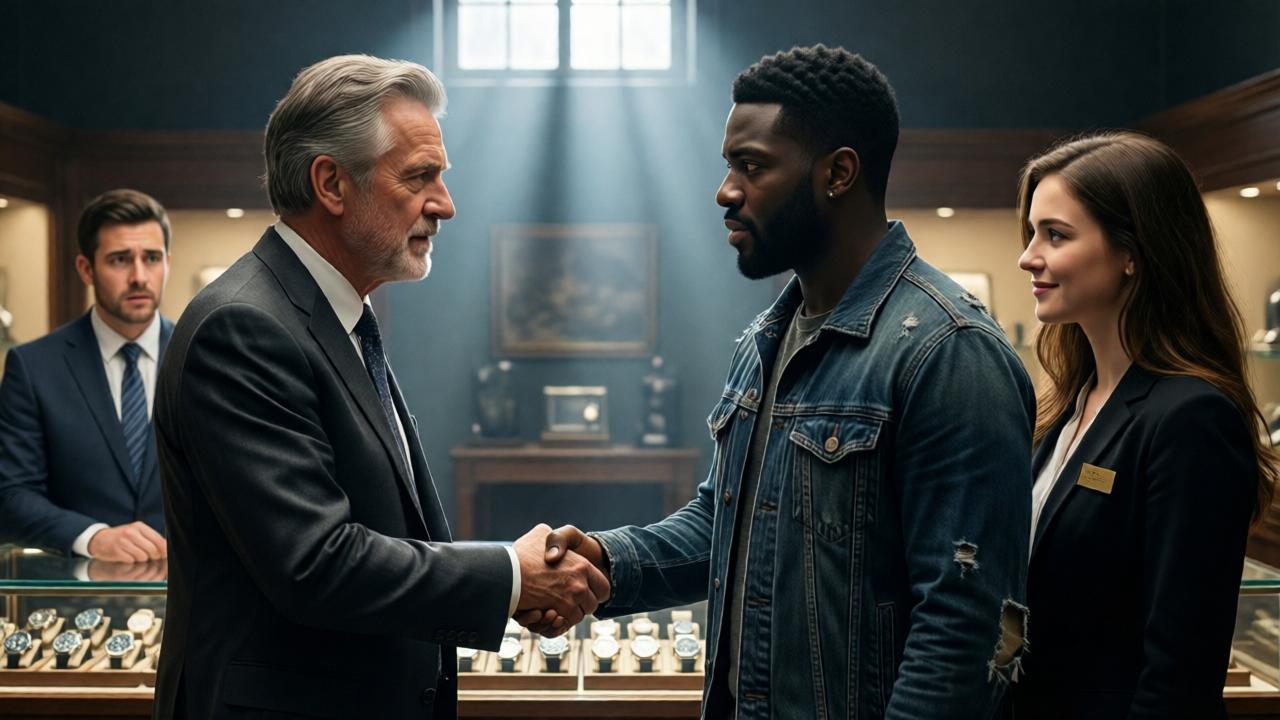
Ethan’s face drained of all color, his earlier arrogance replaced by a sickening dread. Charles Whitmore placed a hand on Marcus’s shoulder, then turned to address his staff, his voice thick. “This man saved my life more than once when we were boys. He is my brother. And today, he has shown us the true value this store had forgotten.” He then looked directly at Rachel. “Your job is not only secure; you are now the head of client relations. You saw the man, not the jacket.” The lesson that day at Aurelius Watches wasn’t about the price of time, but its priceless nature—and the profound cost of judging a person’s story by its cover.