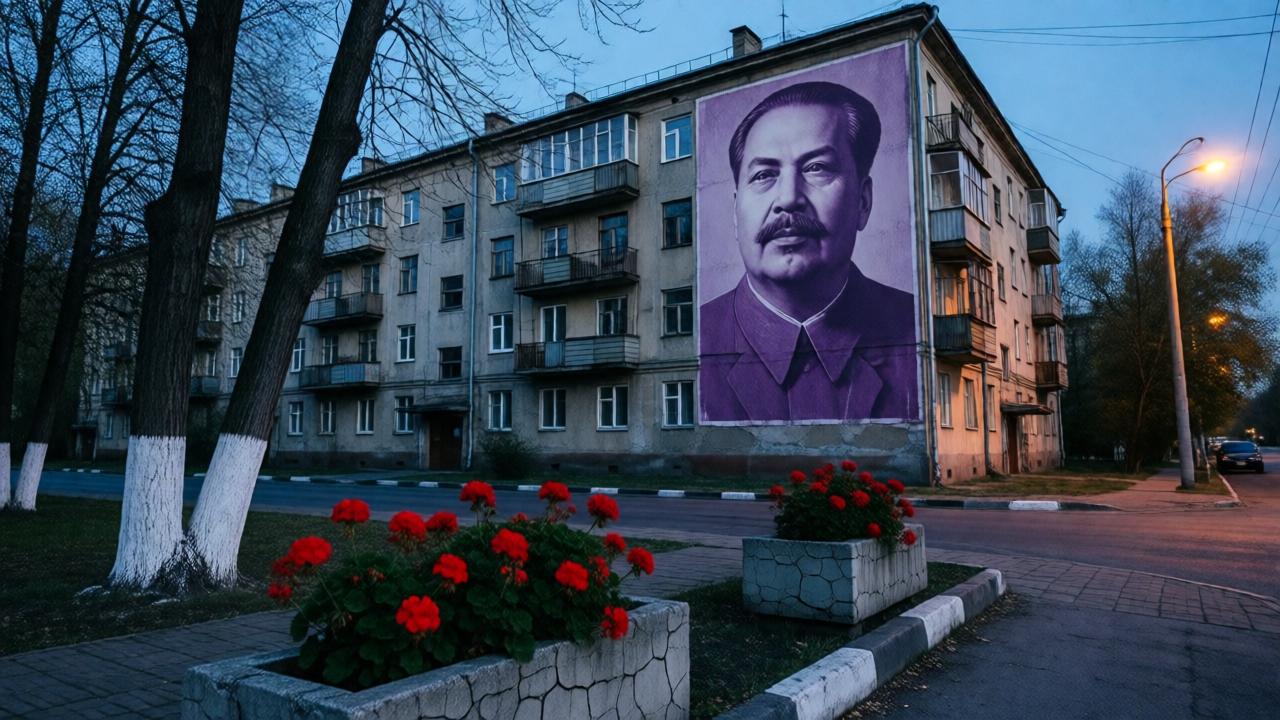
Bordovia is a place of profound contradiction, a post-Soviet republic sealed off from memory itself. Its European architecture stands in a state of elegant decay, with bleak districts and crumbling neighborhoods. Yet, amid the neglect, a bizarre order persists. The city administration dutifully plants bright, defiant flowers in the courtyards of crooked five-story buildings, painting the curbs and the lower halves of tree trunks a stark, ceremonial white. This whitewash cannot mask the pervasive violet, however. The city is draped in posters bearing the stern, ubiquitous face of the Supreme Ruler, whose image is a constant companion on every television screen.
Against this backdrop, an eighteen-year-old named Mark made his choice. He threw himself into a river beyond the city limits and swam without looking back. “The current felt like freedom,” he would later recall, “cold and directionless, but mine.” He crawled through a dark, unforgiving forest, driven by a primal need for elsewhere. His goal was a barbed-wire fence, swept by methodical searchlights. Slipping through the wire, he left Bordovia behind, or so he believed. For twenty years, he heard nothing of it. In his new country, he learned its language, built a life, and became an artist of international renown.
At forty, success led him onto a plane, invited to an exhibition in a distant land. Mid-flight, a malfunction forced an emergency landing. The moment the wheels touched the tarmac, Mark’s world inverted. Escorted into a sterile airport room, he was met with a statement that felt like a physical blow: “You are a citizen of the Republic of Bordovia,” they told him. “And you are home.” While the other passengers continued their journey, Mark was detained. The borders he had crossed decades ago had never truly opened for him; they had merely been waiting.
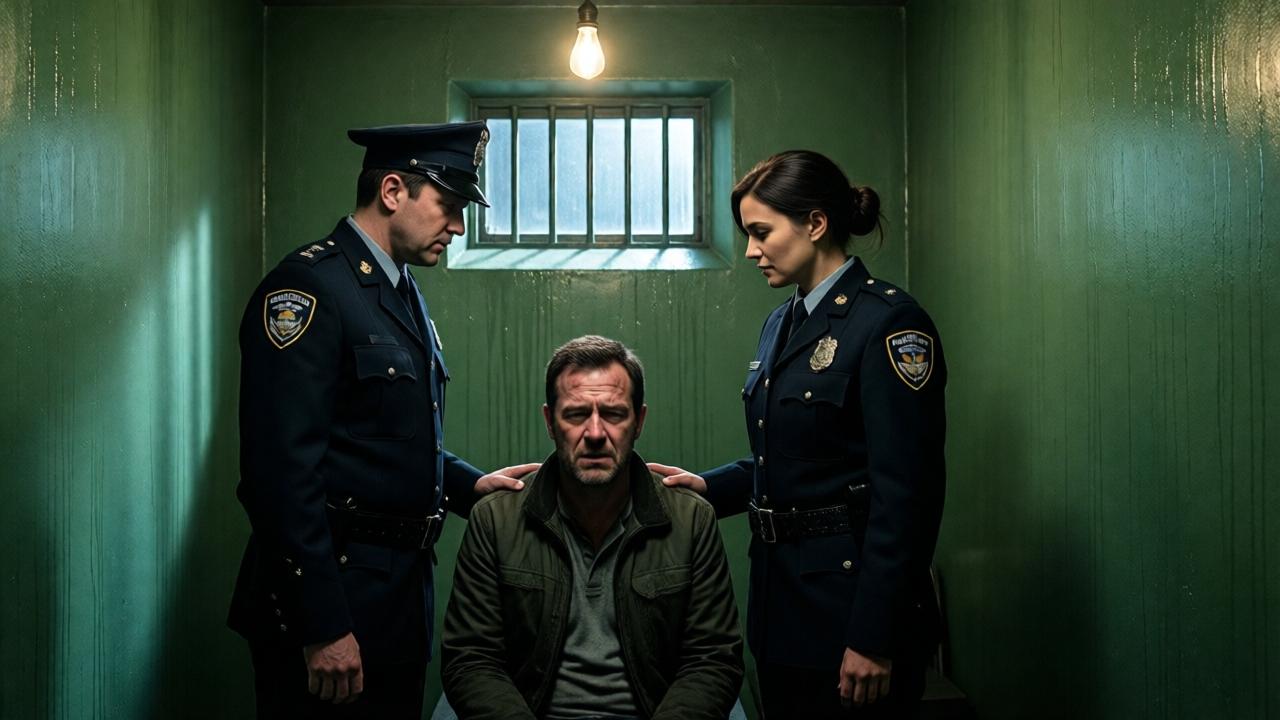
He found himself in a dim, damp green room, a single barred window set high near the ceiling. A man and a woman in the crisp uniforms of the secret police entered. Their offer was a gilded cage. “You must live among your brothers, your people,” the woman explained calmly. “You will be given the opportunity to be a celebrated Bordovian artist. You will be loved and respected. You will have an apartment and a pension for the rest of your life.” They paused, letting the weight of the alternative hang in the damp air. “Choose.” Faced with the unspoken threat, Mark agreed.
His new life was a phantom existence. From morning until night, he wandered the empty, echoing streets of the desolate city. There was no one outside. Only occasional drunken shouts in the distance broke the silence, reminders of a populace living behind closed doors. The state’s theater continued unabated. On a clear morning in the public square, Mark witnessed the Ruler on a podium, dressed in his signature violet suit and hat, shaking his fist at the sky in a fiery, empty address to a sparse, obedient crowd.
- The ceremonial white paint on curbs and trees.
- The endless violet posters of the Ruler’s face.
- The bright, state-planted flowers in decaying courtyards.
- The absolute silence of the empty streets.
Exhausted, hollowed out, Mark found himself drawn back to the river of his youth, the site of his first escape. In one hand, held above the dark water, he carried a small bag with his few belongings. He followed the familiar path, the memory of a young man’s hope guiding his steps. He reached the barbed-wire fence. But where once there had been a forest and a chance, now stood an immovable truth: a three-meter-high concrete wall, blank and final, stretching into the distance. The state had sealed the last crack in its violet cage. Mark dropped to his knees in the mud, the bag slipping from his grasp, and wept for the freedom that was, and the homeland that had become a life sentence.
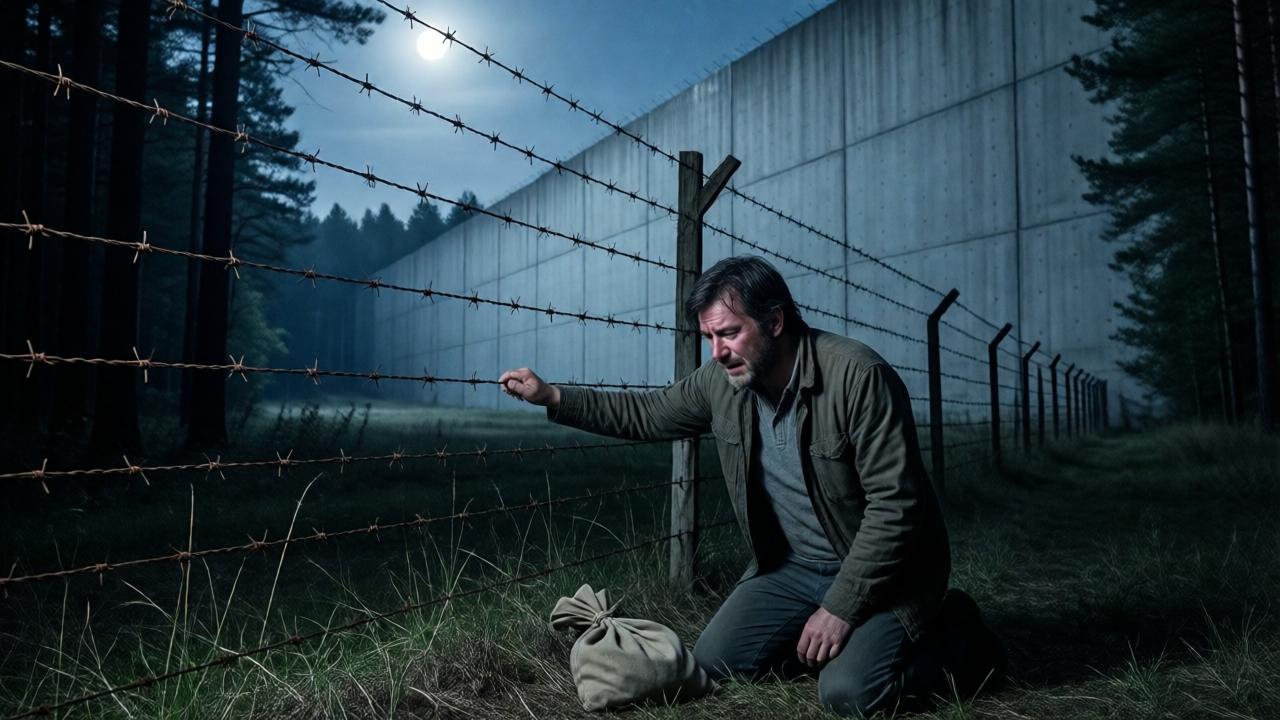
Exhausted, hollowed out, Mark found himself drawn back to the river of his youth, the site of his first escape. In one hand, held above the dark water, he carried a small bag with his few belongings. He followed the familiar path, the memory of a young man’s hope guiding his steps. He reached the barbed-wire fence. But where once there had been a forest and a chance, now stood an immovable truth: a three-meter-high concrete wall, blank and final, stretching into the distance. The state had sealed the last crack in its violet cage. Mark dropped to his knees in the mud, the bag slipping from his grasp, and wept for the freedom that was, and the homeland that had become a life sentence.