The evening began like any other date night for John and his fiancée. The soft glow of candlelight flickered across the white tablecloth as they settled into their seats at a cozy corner table. The murmur of other diners and the clink of cutlery created a familiar backdrop. They were perusing the menu when a waiter approached, notepad in hand. But as John looked up to give his order, the world seemed to tilt on its axis. His eyes widened, and in a heartbeat, he was on his feet. “Wait, Smith? Is that really you?” he exclaimed, his voice a mixture of shock and pure joy. “Long time no see, brother. Where have you been all these years?”
The waiter, a man named Smith, broke into a warm, genuine smile that reached his eyes. “Yes, John. It’s really nice to see you after so many years,” he replied, his voice steady but touched with emotion. “You went abroad for your studies and after that, we lost touch.” The years melted away in that instant. John, beaming, turned to his fiancée. “Babe, this is my childhood best friend. I practically grew up in his house more than my own. We studied together for 12 years. He’s my best friend forever.” His fiancée offered a tight, perfunctory smile that didn’t reach her eyes, a silent warning bell that John, in his elation, chose to ignore.

Overcome with nostalgia, John gestured to an empty chair. “Bro, please sit with us. We finally met after such a long time. Have dinner with us. I would be really happy.” It was a heartfelt, spontaneous invitation. But the moment was shattered by a sharp, angry interruption. “Babe, please stop,” his fiancée hissed, her voice low but cutting. “We came here for a date and you’re asking your friend to sit with us?” Smith, ever the professional, took a polite step back. “It’s okay, bro. You guys enjoy. Just tell me what you’d like to order.” Yet John, the loyal friend, insisted. “No worries at all. Please sit with us today.”
The tension at the table became palpable. The fiancée’s composure snapped. “Fine. So you’re completely ignoring me now,” she said, her voice rising. “Decide. Are you sitting with him or with me?” John looked at her, his earlier joy replaced by a calm, firm resolve. “Please stop. He’s like my brother. Why are you creating a scene?” Her reply was a cold dagger, meant to wound and humiliate. “He’s just a low-class poor waiter. I’m not having dinner with someone like him.” The words hung in the air. Smith’s smile vanished, replaced by a flush of embarrassment and shame. He turned quietly, preparing to retreat from the painful scene.

But John’s hand shot out, stopping Smith in his tracks. His voice was firm, leaving no room for argument. “He will eat with me,” John declared, his gaze locked on his fiancée. “And if you have a problem with that, you’re free to leave.” For a moment, there was only stunned silence. Then, with a sound of disgust, she snatched her purse, stood up, and stormed out of the restaurant, the eyes of other diners following her exit. John called after her, his voice carrying clearly. “Listen carefully. You judged him because of his job and status. I can never marry a woman who looks down on people. Someone like you should never come back into my life again.”
- Loyalty to a lifelong friend over a romantic relationship.
- Rejecting superficial judgments based on profession and social class.
- Choosing human dignity and respect over social convenience.
- The courage to uphold one’s values in a moment of public conflict.
With the door swinging shut behind her, the atmosphere shifted. The tension drained away, replaced by a quiet, profound understanding. John turned back to Smith, offering a reassuring smile. They sat down together at the table meant for a romantic date. The meal they shared that night was nourished by something far deeper than the food on their plates. It was a meal served with love, seasoned with mutual respect, and consumed with the full dignity of their enduring friendship. In that simple act, John made his choice clear: some bonds, forged in childhood and built on genuine respect, are non-negotiable.
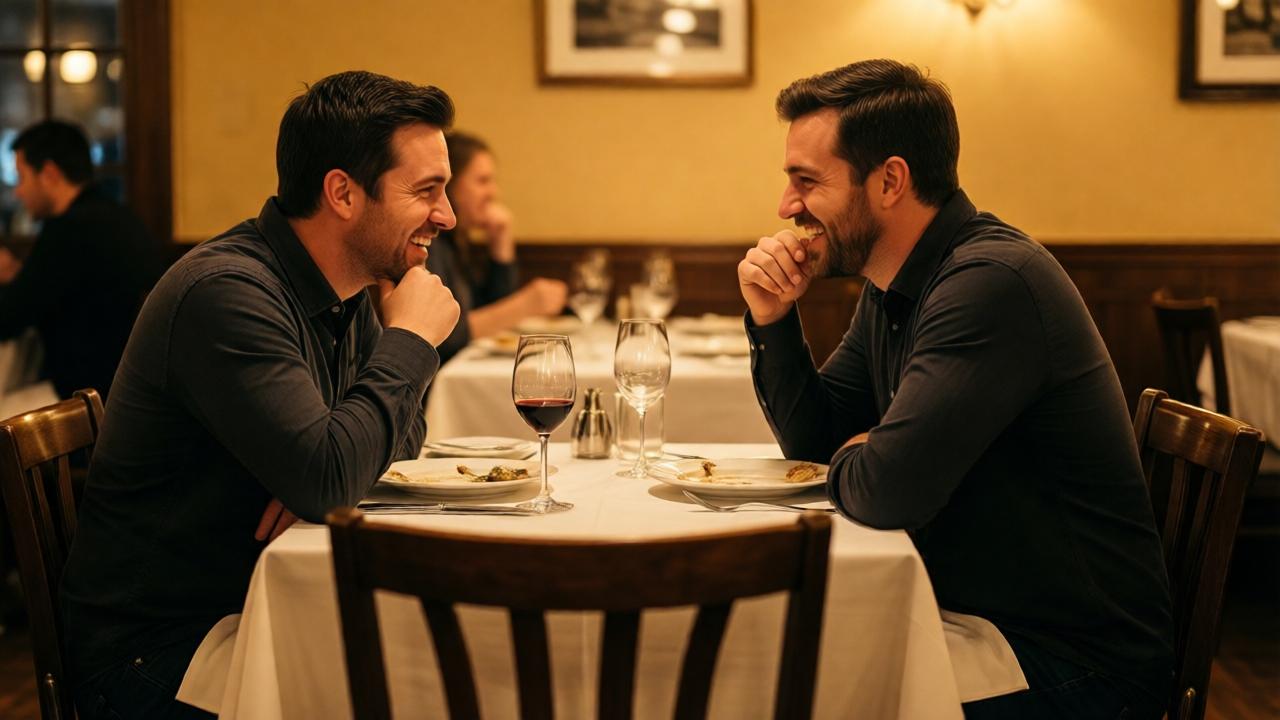
The story of John, Smith, and the fiancée resonates because it presents a clear crossroads of character. It asks a simple question: what do we value more—the appearance of status or the substance of a person? John’s decision, though difficult, reaffirmed that true respect is blind to job titles and bank accounts. It is a reminder that our choices in moments of conflict define us far more than our comforts in moments of peace. So, did John do right? The answer lies not in the lost romance, but in the friendship preserved and the principle upheld.