The elevator doors slid shut with a soft chime, sealing in two strangers on a journey to the 12th floor. One was a woman, her posture tense, leaning on a pair of crutches. The other was a man in a simple maintenance uniform, carrying a toolbox. For her, this ascent was the latest in a grueling six-month campaign—interview number seventeen. For him, it was just another day at the office building. Neither could have predicted how the next few minutes would change everything.
The elevator climbed two floors, then shuddered to an abrupt halt. The lights flickered and died, plunging them into darkness. A panicked whisper cut through the silence. “No, no, no, no,” she said, her voice tight with dread. “It happens,” came the calm reply from the man. “Give it a minute.” With a sigh, she slowly lowered herself to the floor, her crutches resting across her lap. To her surprise, she heard the rustle of fabric beside her. He had sat down, too, and the beam from his flashlight painted a small circle of light on the wall. “What are you doing?” she asked, bewildered. “My knees hurt standing,” he said simply.
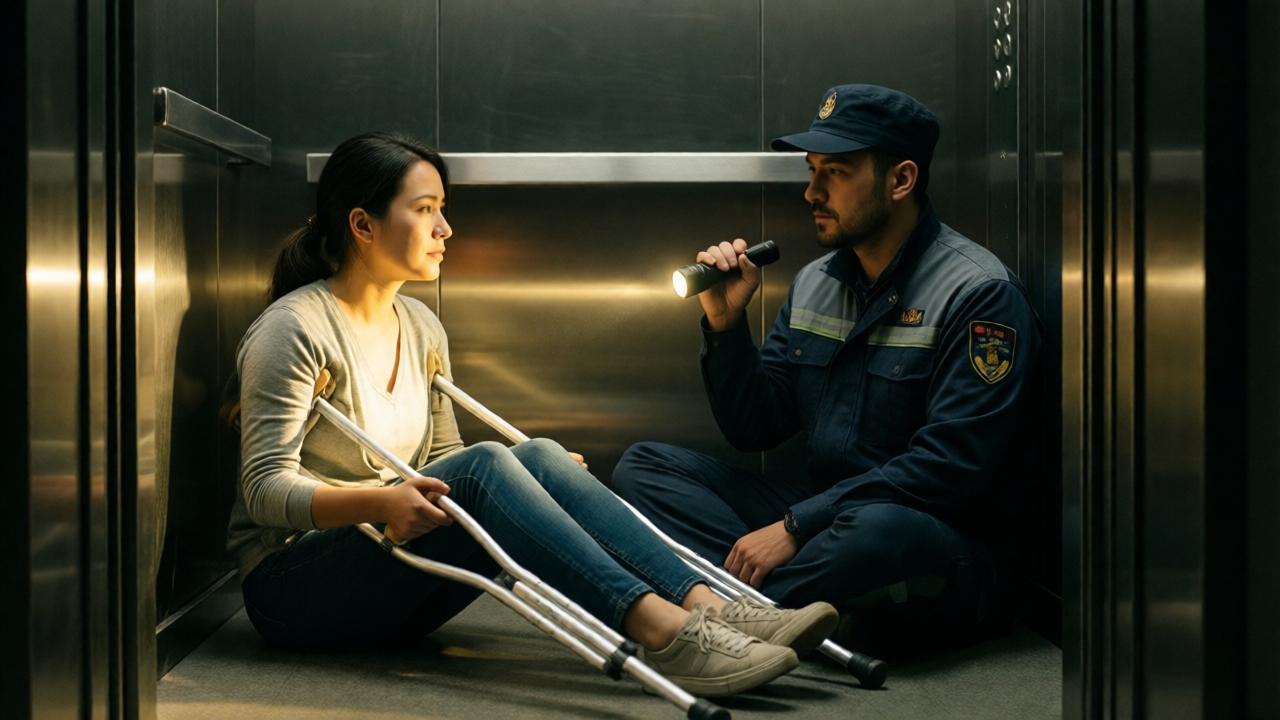
After a long silence, her guard began to crumble in the confidential dark. “I’m not going to get this job anyway,” she said quietly. “Why?” he asked. Her voice was barely a whisper. “Because I walk in on these crutches and I watch their faces change. Before I even say one word.” She let the statement hang, heavy with the weight of seventeen rejections. The man considered this, then posed a question that shifted the axis of the conversation. “What do you see when you look at yourself?” She looked at him, confused. “Not what they see,” he clarified. “What do you see?”
She was quiet, then the truth spilled out. “Someone who fought for everything. Someone who never gave up.” Her voice cracked with emotion. “Someone who deserves a chance.” The man nodded in the dim light. “Then walk in there like that person.” As if on cue, the elevator hummed back to life. The lights flickered on, and they both stood. “12th floor,” he said. “Go.” She offered a small, determined smile and made her way to the reception desk, where a new challenge awaited.
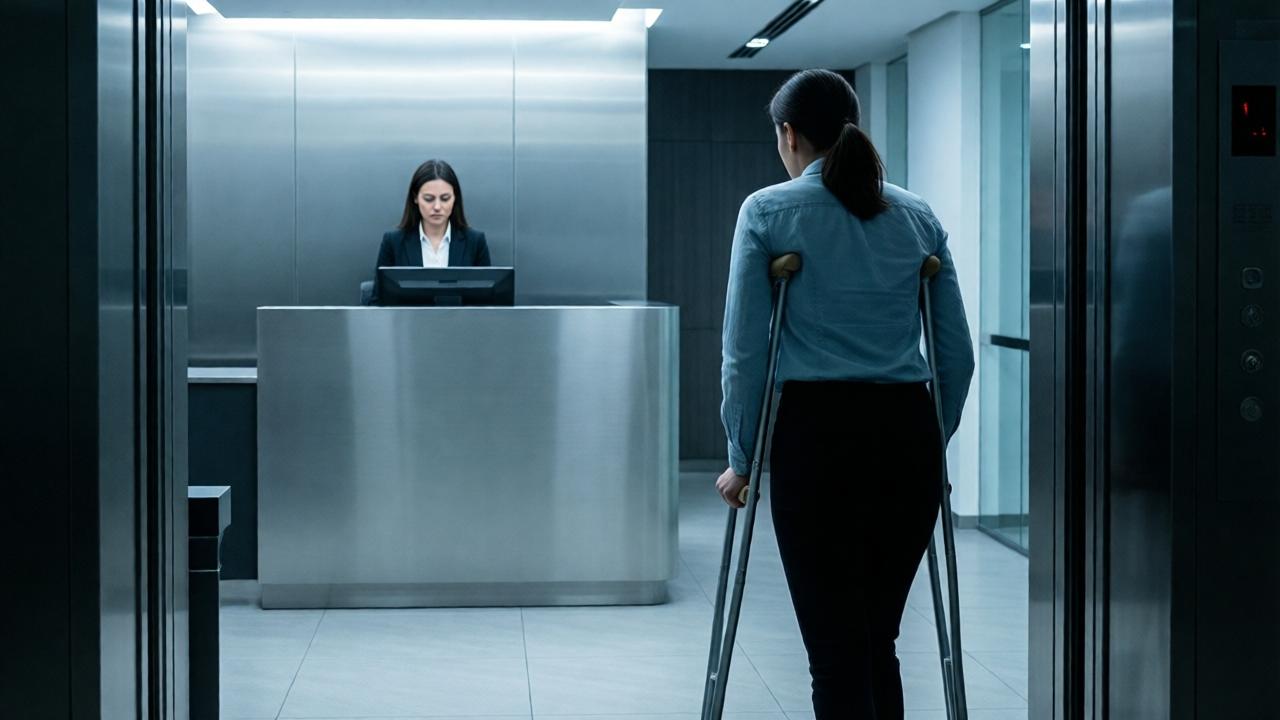
The receptionist’s eyes flicked from the crutches to her computer screen. “You’re late,” she stated flatly. After a perfunctory glance, she added, “With that many applicants today, I’m not sure why you even came.” A pause. “No offense. But look at your competition.” The woman sat down quietly, hands folded in her lap, the hope from the elevator beginning to drain away. Minutes later, the maintenance man walked through the lobby. He saw her defeated expression, then looked at the receptionist. He approached the desk.
“Oh, mister!” the receptionist said, her smile instantly professional. He spoke quietly but with undeniable authority. “Why were you rude to her?” “Sir, I was just being honest,” she defended. “You looked at her crutches and decided,” he said. “Before she said one word.” He let the words sink in. “In this company, we treat every person with dignity. That is not a suggestion.” He then turned and walked to the astonished woman, holding out a business card. Her eyes widened as she read it: Chief Executive Officer.
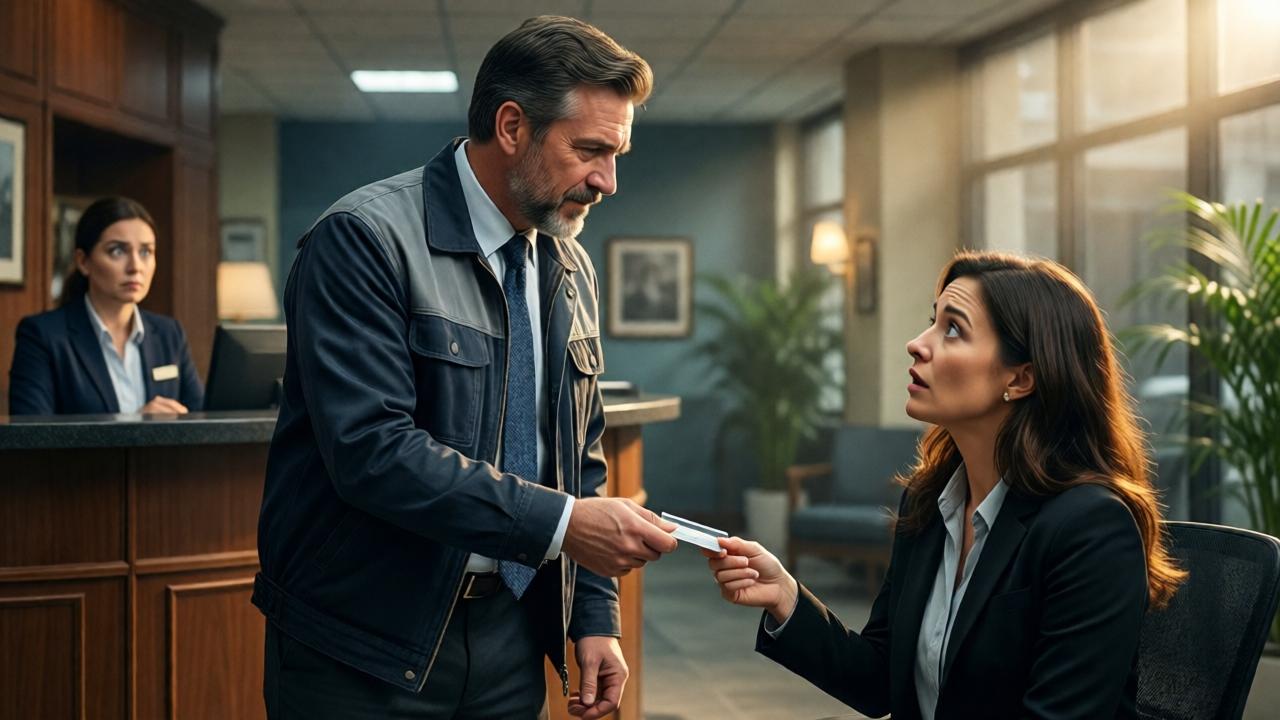
She looked from the card to his face. “You told me in that elevator exactly who you are,” he said. “That is who I want in this company. Come with me upstairs.” As she stood, the receptionist sat utterly frozen. Inside the elevator once more, ascending to the executive suite, the woman found her voice. “You sat on the floor with me.” He smiled. “You needed someone to sit with you.” She looked ahead, the cityscape unfolding through the glass, and said quietly, “Thank you.” The lesson was etched into that shared silence: Treat every person with dignity. You never know who is sitting beside you.